
Frequently Asked Questions about AMSOIL
Purchasing AMSOIL Products
Where can I purchase AMSOIL Products?
You can order products online through this site or you can order by phone by calling our customer service line: 1-800-777-7094.*
* If ordering by phone, be sure to mention my name, Richard Rioux, and/or my Dealer ZO # 5256323.
You can also sign up for a Preferred Customer membership and save up to 25% off the retail price on all your orders.
Can I purchase AMSOIL Products at a discounted price?
Yes. You can sign up for a Preferred Customer membership. For a small yearly (or by-yearly) fee, you can purchase the products at up to 25% off the retail price.
Plus, with a PC membership you get lots of additional perks such as, a $5 coupon with every $100 spent, a $5 birthday gift coupon, a complementary membership renewal when you spend $500 or more throughout the year, plus you receive exclusive offers throughout the year.
For more info, click this link: https://www.amsoil.com/offers/pc/?zo=5256323
Where will my AMSOIL Product order ship from?
Products can be shipped to any address throughout North America. They ship from one of AMSOIL’s 10 Distribution Centers (8 in the US and 2 in Canada) and are delivered right to your door - usually within 2 to 5 business days for most locations. Free Shipping is available on qualifying orders.
For a complete list of our AMSOIL Centers locations, click this link: AMSOIL DISTRIBUTION CENTER LOCATOR
How long have AMSOIL Lubricants been on the market?
AMSOIL products have been available since 1972, when AMSOIL 10W-40 Synthetic Motor Oil became the first synthetic motor oil to meet American Petroleum Institute (API) service requirements. Today, AMSOIL manufactures synthetic lubricants for virtually all automotive, powersports, commercial and industrial applications.
Why are certain AMSOIL products not available in Canada?
The majority of products that are unavailable in Canada are aerosols, which are governed under different regulations in Canada than in the U.S. Those regulations would require alterations to our formulations that would result in unique formulas in Canada. Meanwhile, minimum production quantity requirements would result in inventory levels that exceed the products’ shelf life, further increasing costs and product waste to unacceptable levels.
In the past, we have not been able to develop enough customer demand in Canada to support the increased costs associated with producing unique product lines specifically for the Canadian market. In addition, Canadian laws require specific product labels that differ from U.S. labels, driving up costs for labels and production even further. The handful of non-aerosol products that are unavailable in Canada are slower-moving products, and we are therefore unable to offer them in Canada.
Becoming an AMSOIL Dealer
Where do I sign up to become an AMSOIL Dealer?
To learn more about becoming an AMSOIL Dealer and register, click the LINK below:
Are AMSOIL Dealers required to sell products?
No. Dealers only need to sell if they want to earn commissions and bonuses. Even then, Dealers are encouraged to operate their businesses according to their own goals and schedules; AMSOIL does not place any pressure on its Dealers to make sales.
Is it possible to earn residual income as an AMSOIL Dealer?
Residual income refers to money earned through indirect involvement. While it is possible to earn residual income as an AMSOIL Dealer, it requires an active group of successful personal group Dealers.
Dealers who register other Dealers and help train them to succeed can continue earning commissions if they fall ill or cannot actively work their Dealerships for another reason. Building a successful personal group, however, requires a strong commitment to education and training.
At what price do AMSOIL Dealers purchase the products?
Dealers purchase AMSOIL products at wholesale pricing.
Are there costs involved to cancel an AMSOIL Dealership?
No. The AMSOIL registration fee is refundable if notification of intent is made to the sponsor or AMSOIL INC. within three days of the date shown on the application. Otherwise, a Dealer can simply choose not to renew his or her membership.
Synthetic Oil: From Conventional to Synthetics
Can AMSOIL lubricants be safely mixed together?
Applications require specific lubricant properties to deliver maximum performance and protection. AMSOIL carefully tailors its synthetic lubricants under the strictest quality control standards to provide the required properties for the intended application. Mixing AMSOIL synthetic lubricants is not only unnecessary, it may lead to reduced performance and even equipment failure.
Automatic transmission fluids offer a perfect example. Some transmissions require lubricants that contain specific frictional characteristics to reduce, or eliminate, clutch slippage, while other transmissions may require different frictional requirements. Mixing fluids recommended for different performance specifications may lead to a host of problems, including erratic shifting and transmission failure.
In some applications, mixing lubricants may not lead to equipment failure, but it will reduce performance. For example, if AMSOIL Signature Series 5W-30 Synthetic Motor Oil is installed in a vehicle, and its owner adds AMSOIL OE Synthetic 5W-30 Motor Oil to top off the engine if Signature Series isn’t available, the vehicle will continue to operate perfectly; Signature Series and OE Synthetic Motor Oil share a similar chemistry, and formulations of the same viscosity can be safely mixed. However, mixing lubricants will shorten Signature Series' life expectancy and reduce its performance benefits. AMSOIL does not support extended drain intervals where oils have been mixed.
To minimize the risk of performance- and warranty-related issues due to improper mixing, AMSOIL does NOT recommend mixing AMSOIL synthetic lubricants.
Can AMSOIL motor oils be safely mixed with other motor oil brands?
Yes. AMSOIL synthetic motor oils are compatible with other conventional and synthetic motor oils. Mixing other oils with AMSOIL motor oils, however, will shorten the oil’s life expectancy and reduce its performance benefits. AMSOIL does not support extended drain intervals where oils have been mixed. Mixing other oils with AMSOIL motor oils will also void the AMSOIL limited warranty.
What is the difference between conventional and synthetic oil?
Motor oil, whether synthetic or petroleum-based, consists of molecular chains of hydrogen and carbon atoms, referred to as hydrocarbons. Petroleum crude oil is a thick, highly flammable dark-brown or greenish liquid with high energy density. Many contaminating elements exist in this complex mixture of hydrocarbons, including sulfur, nitrogen, oxygen and metal components such as nickel or vanadium. Petroleum crude oil is the raw material used for a wide variety of petrochemicals, including solvents, fertilizers, plastics and lubricants.
The oil refining process separates the various types of molecules in the oil by weight, resulting in a concentrated batch suitable for manufacturing products such as gasoline, LPG, kerosene or lubricant base oils. The chemical composition of conventional motor oil can vary substantially depending on the raw crude oil refining process.
While petroleum base oils are refined, synthetic base oils are manufactured and can achieve a higher performance level. Synthetic oil is chemically engineered for a certain molecular composition with a tailored and uniform structure. Such fine-tuned control over the final molecular composition of synthetic oils is the key to their superior performance properties. Designing molecular structures in a planned and orderly fashion results in molecules, and end-products, that are far more stable than their refined petroleum counterparts.
What role do additives play in motor oil performance?
Most lubricating oils have other chemicals added to improve the overall performance of the fluid. Chemical additives are used to enhance the beneficial properties of the base oil or to make up for oil deficiencies. For passenger car motor oils, base oil makes up 70 to 80 percent of the final product; the other 20 to 30 percent is comprised of additive chemistry.
Additives help lubricants stand up to extreme operating environments. Even the best base oil would not be able to protect as well against the effects of heat, shearing forces, chemical and water dilution, corrosion and wear particles. In short, additives make good base oils even better. They give good base oils the performance benefits consumers have come to expect, such as multi-grade performance, extended drain intervals and extreme-pressure performance.
Anti-wear Agents chemically react to form a film barrier that prevent metal-to-metal contact and wear.
Antioxidants reduce the tendency for oil to react with oxygen and reduce sludge buildup.
Dispersants help suspend and disperse contaminants in the oil to keep engine surfaces free of sludge and deposits. They fight the build-up of corrosive acids and are most efficient at controlling low-temperature deposits.
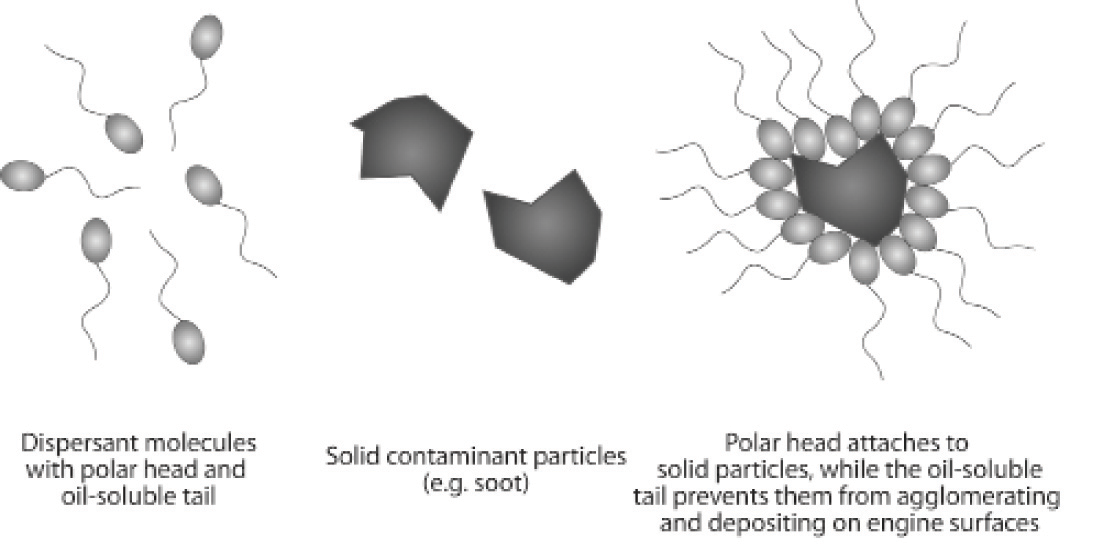
Detergents help suspend and disperse contaminants in the oil to keep engine surfaces free of sludge and deposits. They are most efficient at controlling high-temperature deposits.
Extreme-Pressure Additives coat metal surfaces to help prevent close-contact components from seizing under extreme pressure. They are activated by high temperatures and high loads to react with the metal’s surface to form a sacrificial wear layer on components.
Foam Inhibitors reduce the surface tension of air bubbles and causes them to collapse.
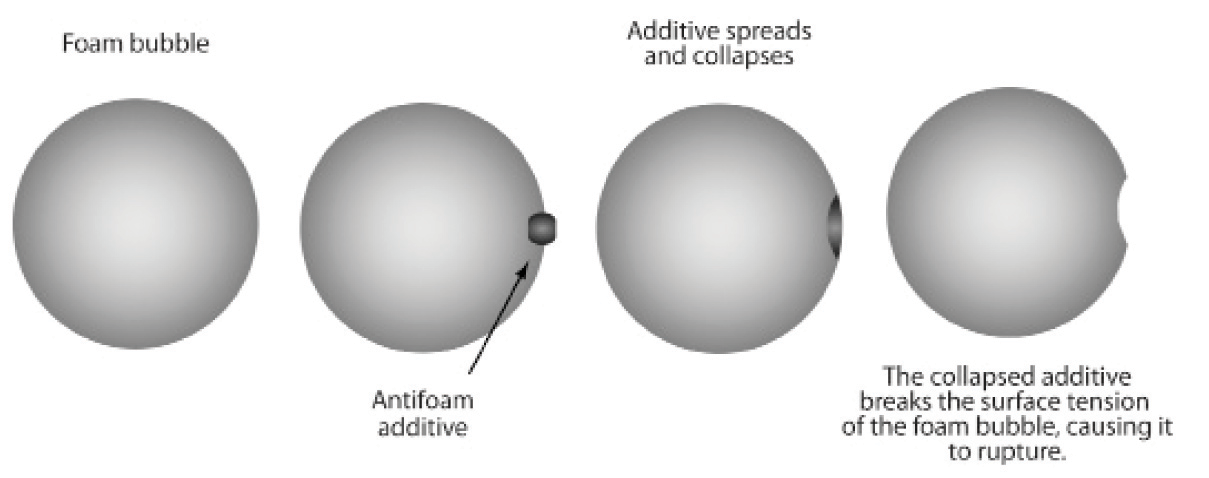
Friction Modifiers can be used to give oil more 'slippery' characteristics. In engine oils, friction modifiers are used to increase the oil’s lubricity for the purpose of reducing friction and improving fuel economy.
Pour Point Depressants give high-viscosity oils good low-temperature properties. Pour point depressant polymers inhibit the formation of crystals to minimize low-temperature viscosity increase.
Rust & Corrosion Inhibitors form a protective barrier over component surfaces to seal out water and contaminants. While most rust and corrosion inhibitors work by forming a physical barrier, some rust inhibitors function by neutralizing acids.
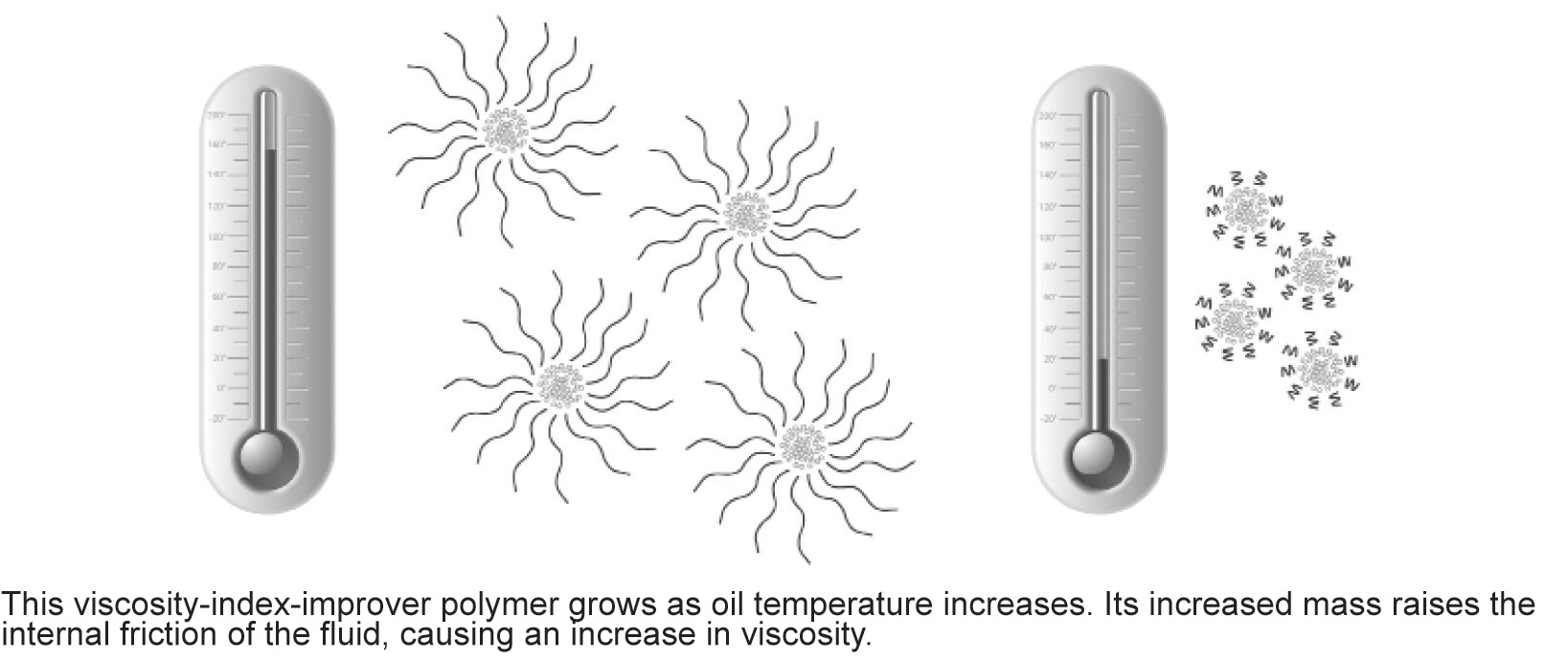
Viscosity Index (VI) Improvers are long-chain polymers that help control the viscosity of multi-grade engine oils. They expand and contract as temperatures vary. High temperatures cause VI improvers to expand and reduce oil thinning; low temperatures cause VI improvers to contract and have little impact on oil viscosity.
Can synthetic oil be used in new engines?
Yes. With very few exceptions, AMSOIL Synthetic Oil is perfectly safe to use in both new and older cars, regardless of make or model, as long as the engine is mechanically sound. (One exception, for instance, might be Mazda vehicles that have a 'rotary' engine.*) In fact, many vehicles today leave the factory with synthetic oil installed as the initial factory fill.
Synthetic oil is superior to conventional oil and significantly outperforms it on all counts. Synthetics deliver superior protection and performance in temperature extremes (hot or cold), keep your engine cleaner by significantly reducing the formation of sludge and varnish, resist oxidation and acid formation, and provide unsurpassed friction reduction and wear protection for extended drain intervals.
* Though Mazda doesn’t recommend it, there are people who have run synthetics in a car with a rotary engine with no problems whatsoever.
Must new cars be broken in using conventional petroleum oil?
No. One popular myth about synthetic oil is that new engines still require an initial break-in period with conventional oil before you can switch to synthetic. However, with most new engines today, this is simply no longer the case.
Today’s engines are built to much higher/tighter manufacturing tolerances (due to more accurate and precise machining and assembly) than the ones in older vehicles, eliminating the need for a long break-in period with conventional oil. Many new vehicles today, including the Dodge Viper and Chevrolet Corvette, leave the factory with synthetic oil installed as the initial "factory fill" motor oil.
Even if synthetic oil wasn’t the ‘initial factory fill’, you do not need to wait before switching over to AMSOIL synthetic motor oils.
What type of Base Stock does AMSOIL use in their synthetic lubricants formulation?
AMSOIL maintains formulation details as proprietary and does not divulge specifics regarding the type of synthetic base stocks used in its synthetic lubricants.
AMSOIL developed the world’s first API-qualified synthetic motor oil in 1972 and has remained the leader in the synthetic lubricant industry by continually researching new technologies and demanding only the highest-quality raw materials. As the company moves forward with new technologies it is increasingly more important that this information remains proprietary.
AMSOIL views synthetic base oils the same as it views additives, with each having its own set of unique properties. AMSOIL does not insist on a particular type of base stock, but insists on particular performance parameters.
AMSOIL chooses whichever synthetic base stock or combination of base stocks delivers the desired result and tailors its lubricants to be application-specific (gasoline, diesel, racing, transmission, gear, extended drain, extreme temperatures, etc.). At the end of the day, the type of base stock used to formulate the oil is inconsequential; the product’s performance is what matters.
Do AMSOIL synthetic motor oils decrease oil consumption?
AMSOIL synthetic motor oils can reduce oil consumption in mechanically sound engines. However, AMSOIL synthetic motor oils cannot fix engines that consume oil due to mechanical problems or worn, dried out seals.
How do AMSOIL synthetic motor oils compare to other motor oils?
The importance of using good-quality oil in an engine cannot be overstated. AMSOIL synthetic motor oils consistently outperform conventional and other synthetic oils in virtually every category of performance, including wear protection, extreme high- and low-temperature performance, foam control, viscosity retention, rust and corrosion protection, volatility and fuel economy.
While other brands may provide good performance in some of these areas, AMSOIL synthetic motor oils consistently perform at the top in every category. Drivers can have confidence knowing that AMSOIL synthetic motor oils provide maximum performance and protection.
I am considering replacing the petroleum oil with synthetic oil in an engine that has over 50,000 miles on it. I have heard that synthetics might clean the engine and cause plugging of the oil filter and narrow oil passageways. Is this true?
Absolutely not! Switching from petroleum oil to AMSOIL synthetic motor oil in routinely maintained vehicles will not cause clogged oil filters or passageways, regardless of mileage.
Sludge, which is caused by poor-quality oil and neglected maintenance practices, would have to be present in significant amounts to plug oil filters and passageways. If an excessive amount of sludge is present in an engine, it is just a matter of time before oil filters and passageways clog, regardless of the installation of AMSOIL synthetic motor oil.
Motor Oil: Oil Change Intervals
What is the difference between 'normal' and 'severe' driving conditions?
Each vehicle manufacturer defines 'normal' and 'severe' driving conditions for its equipment; AMSOIL recommends owners check these definitions in their owner's manual to determine the service condition in which they typically drive.
AMSOIL defines normal service as personal vehicles frequently traveling greater than 10 miles (16 km) at a time and not operating under severe service.
AMSOIL defines severe service for gasoline engines as conditions that include commercial or fleet vehicles; excessive idling; or frequent towing, hauling, plowing or driving in dusty conditions.
AMSOIL defines severe service for diesel engines as extensive engine idling, daily short-trip driving less than 10 miles (16km) or frequent dusty-condition driving.
Is there a recommend procedure for changing AMSOIL synthetic motor oil?
There are no special requirements for changing to AMSOIL synthetic motor oil. However, in older vehicles with high mileage, it may be advisable to use AMSOIL Engine and Transmission Flush first. This will ensure the engine is clean and free of accumulated contaminants that may affect the service life of AMSOIL synthetic motor oil.
Installation of an AMSOIL Oil Filter at every oil change is also recommended.
How frequently should I change the oil in my car?
The question of how frequently you should change your oil depends on a number of different factors.
Some of these factors include:
The ‘type’ of oil used: Synthetic Oil allows for significantly longer drain intervals then Conventional Oil – especially high quality ‘extended drain’ synthetic oils such as AMSOIL’s Signature Series and Extended Life Series synthetic oils.
Driving conditions (normal or severe): For instance, frequent city driving or repeated short distances driving; driving in very cold, very hot, dusty, or sandy environments; frequent towing, hauling, or plowing; excessive idling; etc., will require more frequent oil changes. (Check your Owner’s Manual for more info on severe driving conditions.)
The make, model and year of your car: Because of technological advances in modern engine materials, design and built, as well as significant improvements in engine oil formulations, recommended oil change intervals for new vehicles have become considerably longer.
The bottom line is, the recommended oil change interval will be different for different people and different cars. There is no magical one-size-fits-all number.
One thing that is certain, however, is that the 3,000 miles (5,000 km) oil drain interval recommendation is a thing of the past. For instance, with AMSOIL’s Signature Series oil, you can extend up to 25,000 miles (40,000 km) under normal (ideal) driving conditions.
Why are AMSOIL synthetic motor oils capable of extended drain intervals?
AMSOIL synthetic motor oils are formulated using premium synthetic base oils, and the highest-quality additives, that provide extended-drain capabilities. AMSOIL synthetic motor oils achieve greater cleaning powers, while providing better equipment protection over longer oil drain intervals.
The unique synthetic formulation and robust TBN retention of AMSOIL synthetic motor oils work to resist oxidation and neutralize the acids that shorten the service lives of other oils. Their characteristic resistance to high-temperature volatility (burn-off) helps reduce oil consumption, while maintaining viscosity over longer periods of time than other oils.
Check the product data sheet for specific recommendations.
Why is there an hours limit in addition to time and mileage limits on AMSOIL's synthetic motor oil's service life?
No matter how well motor oil is formulated, it won’t last forever. As the miles accumulate, motor oil begins to degrade and lose its lubricating effectiveness, while the additives are depleted. Severe-service driving conditions accelerate this process. Even with little mileage on the oil, oxidation, gases and moisture take their toll and start the degradation process, making it necessary to set both a mileage and time limit with oil change intervals.
Excessive idling, common with fleet vehicles, puts additional stress on the oil, making it necessary to set an hours limit for vehicles subjected to excessive idling. Motor oil and vehicle manufacturers have developed general recommendations for the maximum amount of time or miles that the oil can be used; typically these intervals fall between 3,000 and 7,500 miles, depending on the type of service.
Many AMSOIL synthetic motor oils are specially formulated for extended drain intervals, providing maximum protection longer than other oils. Check the product data sheet for specific recommendations.
I was always told to change the oil every 3,000 miles (5,000 km) if I wanted to properly maintain my vehicle. How is it possible to drive 25,000 miles (40,000 km) without an oil change using AMSOIL Synthetic Oil?
AMSOIL synthetic lubricants provide extended-drain performance because they resist breakdown better than conventional oils.
AMSOIL oils are formulated to prevent the formation of performance-robbing deposits and resist volatilization (burn-off/evaporation), which alters viscosity and increases oil consumption.
Furthermore, AMSOIL synthetic oil’s superior additive package, a key element in the oil’s ability to function, holds up under engine stresses, remaining serviceable for the full recommended drain interval.
For those seeking the best value, our Signature Series oil is guaranteed for up to 25,000 miles (40,000 km) or one year in mechanically sound engines in normal service and 15,000 miles (24,000 km) or one year in severe service.
In fact, some AMSOIL diesel oils carry drain interval recommendations of up to 50,000 miles (80,000 km).
AMSOIL coined the phrase “Extended Drain Interval,” and it’s been validated by over 45 years of industry testing and millions of over-the-road miles.
Can you determine the condition of motor oil by its color?
Many people believe that you can determine when the motor oil in your vehicle needs to be changed based on its color - if it's black, or dark brown, it means that the oil is dirty and should be drained. That is a myth, as is the related notion that you can identify spent oil by smell. The truth is, you cannot determine the condition of used motor oil based on its color (or smell).
A common misconception is that high quality motor oil should come out of an engine looking clean at the time of an oil change. Nothing could be further from the truth. If the oil is doing its job of cleaning the engine, then it should be dirty when it is drained. In other words, an oil getting darker only means that its doing its job of cleaning the engine.
Motor oil will start looking dirty a short time after it is put to use. In the case of diesel engines, the oil will look dirty within a few hours of operation. These are signs that the motor oil is doing its job of keeping soot, dirt, and other combustion contaminants in suspension to be carried to the filter or removed from the crankcase when the oil is changed. Motor oils have been formulated to hold these contaminants in suspension until they can be removed with an oil and filter change.
Furthermore, the continual exposure to periods of high heat naturally darkens motor oil. This is perfectly normal. Oxidation is another thing that can cause the oil to darken (and thicken), which again is perfectly normal.
Also, some additives in motor oil are more susceptible to darkening in the presence of heat than others, which is why one brand of motor oil will darken faster than another. For example, Molybdenum (Moly for short), a popular AW additive used in many motor oils, is black.
But what most often causes oil to turn black is soot - which is a by-product of combustion. However, since soot particles are less than one micron in size - most are about the size of a human virus (0.03 micron) - they typically don’t cause engine wear (unless they agglomerate into larger particles). For comparison, a human hair is roughly 70 microns in diameter.
Detergents and Dispersants will clean and remove these soot particles from the engine's surfaces and hold those contaminants suspended and dispersed in the oil. Dispersants cling to the soot particle and envelop it, preventing it from agglomerating and forming deposits on surfaces.
High dispersancy oils help ensure that the soot particles do not agglomerate. Plus they are formulated to cope with higher soot loadings of the oil. If soot particles do agglomerate into larger wear-causing contaminants, the Oil Filter will catch most of them and remove them from circulation.
Soot buildup only becomes an issue if/when the oil becomes over-saturated with soot (which will usually also result in increased oil viscosity). Detergents and Ashless Dispersants also work to neutralize acids and the corrosive effects of combustion and oxidation bi-products.
A Used Oil Analysis (UOA) from a reputable lab is the only surefire way to determine the oil's condition and how much life remains in it. Chemically analyzing an oil sample reveals the condition of the oil, the presence of contaminants, fuel dilution and so on. [see: Oil Analysis]
Motor Oil: Oil Viscosity
What is Oil Viscosity?
In short, this is the resistance of your engine oil to flow and its ability to stay in the same shape no matter what’s going on. When it comes to having oil viscosity explained in simple terms, the easiest way to do that is by using a simple distinction we all know from our everyday lives – the difference between water and honey. While water flows freely and goes wherever it wants, honey is more condensed and doesn’t flow that easily because it’s thicker and heavier than most liquids, including water.
In other words, the viscosity of honey is higher than water, and that’s the way to perceive engine oil as well. With so many different brands and products out there, finding the right stuff for your vehicle might not be the easiest thing in the world, which is why oil viscosity is usually the first thing you hear about when you talk to your mechanic.
And the thicker your oil is the better, simply because it won’t run all over your engine and ruin your car. What’s even more important is that this high-quality oil will help your vehicle run more smoothly and without any interruptions, and that’s something all car owners want to hear.
How do you measure Oil Viscosity?
Oil viscosity is presented in different ways and it’s measured in different ways as well. Two of the most accurate and relevant ways to do that are kinematic and dynamic viscosity. The former presents the resistance of your oil to flow and how it reacts to gravity.
Oil products with a lower viscosity factor will spread all over the place and will flow faster than the alternatives. Its kinematic viscosity also determines specific oil’s high-temperature viscosity and includes its grade in the name of the oil product. This helps a layperson know what they’re buying, how they’re spending their money, and whether they’re doing the right thing, so pay attention to the high-temperature viscosity grade next time you’re purchasing engine oil.
When it comes to the dynamic viscosity, this is something that defines oil in another way. Instead of focusing on its resistance to flow, it determines how much energy your engine needs to move through the oil you buy.
The lower this number is the less energy it requires, and that’s always a good outcome for all drivers out there. For instance, you can find oils that require zero energy, and those are the most valued and, therefore, the most expensive variations you can find on the market right now.
So, using these two factors, you can figure out what you’re buying and whether you’re spending too much money or not. To take a random engine oil as an example, let’s look at the 20W-20 oil you can get anywhere you want – the “20W” part signifies the dynamic grade, and it implies that it’s not as good as it should be, while the “20” grade means that this particular oil isn’t as thick as it could be. What you need to look for is a product that has low dynamic viscosity and, at the same time, high kinematic viscosity.
What SAE Viscosity Grade of oil should I use in my vehicle?
All vehicle manufacturers today recommend the use of 'multi-grade' oils. To find out which multigrade oil is recommended for your particular vehicle, you should consult your owner’s manual. The manual might list only one grade of oil for use in all temperature ranges, or it might list a few different grades of oil to choose from based on ambient temperatures.
Now because these are the oil grades that the manufacturer ‘recommends’ for use in your vehicle, does this mean that they are the only grades that can be used in the vehicle’s engine? Well, not exactly. First, let’s look at what these numbers actually mean.
The viscosity of a fluid describes its internal resistance to flow – the thicker the oil, the higher its viscosity. Let’s use a 5W-30 multi-grade oil as an example. The first number (5W) is the 'cold' viscosity rating of the oil, the ‘W’ stands for winter, and the last number (30) is the 'hot' viscosity rating of the oil. Therefore, when the oil is cold (e.g. in sub-zero temperatures) it has a rating of 5W. When the oil is hot (e.g. circulating in a hot engine) it has a rating of 30.
What this means is that a 0W-30, a 5W-30, and a 10W-30 multi-grade oil will all have essentially the same viscosity (thickness) when circulating in a hot engine but will have a completely different viscosity when cold.
Note: The viscosity grade numbers (e.g. the 5W and the 30 in a 5W-30 multi-grade oil) are simply a rating representing the viscosity range of the oil. They are NOT the actual viscosity of the oil. The viscosity of oil is temperature dependent. In other words, a particular grade of oil will have a different viscosity (thickness) at different temperatures.
Therefore, the question as to which oil viscosity grade can be used in your vehicle’s engine will depend on a number of different factors, for one, the type of climate you will be driving in. If you live in a very hot climate you could use a higher viscosity grade oil (SAE 10W-40 for instance), and if you live in a much colder climate you could use a lower viscosity grade oil (SAE 0W-20 for instance).
What does the 'W' represent in a multigrade motor oil (e.g., 5W-30)?
The 'W' in 5W-30 motor oil stands for 'winter' and indicates the oil meets or exceeds certain criteria for good low-temperature performance. Motor oil with SAE viscosity grade 5W-30 behaves like an SAE 30 oil at high temperatures and SAE 5W oil at low temperatures, providing the necessary fluidity for rapid starts and efficient engine operation at low temperatures.
Is SAE 0W-XX too thin a viscosity oil for HIGH ambient temperature operation?
Not at all. As already mentioned, the viscosity grade numbers (e.g. 0W, 5W, 10W) are simply a rating representing the viscosity range of the oil. They are NOT the actual viscosity of the oil.
The viscosity of oil is temperature dependent. At higher temperatures, the oil becomes thinner (viscosity decreases). At lower temperatures, the oil thickens (viscosity increases). Therefore, just like any other grade of oil, an SAE 0W grade oil will have a different viscosity/thickness at different temperatures – thicker when cold, thinner when hot.
With a multi-grade oil, it is the second number (e.g. the 30 in a SAE 0W-30 multi-grade) that will determine the thickness of the oil at operating temperatures not the first number (0W). What this means is that a 0W-30, a 5W-30, and a 10W-30 grade oil will all have essentially the same viscosity when circulating in a hot engine.
Additionally, you also need to understand that at ambient temperatures (yes, even at HIGH ambient temps), ALL grades of oil are too thick/viscous (yes, even an SAE 0W grade oil is too thick). In other words, an SAE 0W grade is thicker at ambient temperatures than an SAE 30 grade is at operating temperatures. It is only after the engine warms up, heating up the oil, that the oil reaches its proper “hot” viscosity (thickness).
What is the Viscosity Index?
Just because most people around you are unaware of the viscosity index doesn’t mean you should keep ignoring this factor as well and consider it to be unimportant in the life of your vehicle. On the contrary, this is one of the most essential things for the future of your car, especially if you want to keep it running perfectly for as long as possible. The reason why the viscosity index is so crucial is easy to understand, though, and it comes down to how much the oil viscosity of your preferred product changes when the outside temperature rises and falls.
These fluctuations in temperature are among those things very few of us notice and take into consideration when thinking about our car, but if your oil fails to respond to them perfectly, you may be causing your engine more problems than you can imagine.
That’s why your viscosity index needs to be as high as possible because that means your oil’s viscosity doesn’t fluctuate too much, regardless of the outside temperature. This is better for your engine because it causes less stress and problems when you’re using it, so take a look at the viscosity index the next time you’re purchasing engine oil.
How does Oil Viscosity affect your engine?
Now that we’ve explained what viscosity is, how it’s measured, and why it’s vital to find the right oil, there’s another crucial issue we have to address – why is this so important for your engine, what does viscosity have to do with it, and how does viscosity affect it in the first place?
As mentioned above, oil viscosity is all about helping your engine run smoothly, and that means bringing its A-game to play when you’re changing speeds, driving in different weather conditions, and putting more pressure on your car than usual. This is something we all do, whether we like it or not, and that’s what makes driving exciting, but it’s also why you need to make sure you’ve picked the right oil for your engine.
This is especially true for people living in colder areas or places where the temperature fluctuations are enormous. In case you need to go somewhere on a cold morning – and this is precisely what most people do because they have to go to work regardless of the weather conditions – your engine might fail you if you don’t have the right oil.
Due to colder temperatures, the oil in your engine thickens, and that makes it more difficult to use, which is why you’re going to need to invest much more energy into this process than usual. And if you want to start your car the moment you get behind the wheel, you’ll need adequate oil that’s going to help your crankshaft do its magic.
The same problems can occur in other weather conditions as well – people living in hot areas deal with thinner oil that’s easier to circulate, but that doesn’t mean they should purchase low-quality oil because of that. Quite the opposite, even in hot places, you need proper engine oil that will allow your car to start immediately, without causing any problems, distractions, and breakdowns in the future.
What happens if your motor isn't good enough?
All of these things are going to happen to you, though, if you’re not careful when purchasing your oil or if you stick to the cheapest options just because you don’t want to spend too much money on oil.
Picking the wrong type of oil is easier than most drivers can imagine, and if you don’t have the right knowledge and the skills that are required in this process, you’ll end up damaging your engine and jeopardizing the future of your vehicle. So, whether you’ve picked low- or high-viscosity oil, you may be making a mistake, so you have to learn a few things about these two types of engine oils, and which is the right one for you.
Engine oils with a low viscosity factor are those products that are too thin to make your engine run properly, but the problem is that some of these products are usually cheap enough to encourage people to purchase them even though they know how faulty they are. The biggest issue with them is that they’re not powerful enough to protect your engine in the years to come.
The layers of oil that are too thin won’t fill the spaces between different engine components adequately, and that’s just going to destroy your engine sooner or later. This is even more obvious if you’re living in an area with fluctuating temperatures or if you’re one of those drivers who love to push the pedal to the metal. If you’re driving carelessly, you can jeopardize your engine even more than usual, and that could cause a massive problem if you’re using low-viscosity oil.
On the other hand, that doesn’t mean that all high-viscosity oils are perfect – on the contrary, they’re just the opposite of the aforementioned products and just as faulty as they are. That’s something you need to keep in mind when purchasing your oil, so try not to insist on higher viscosity, but on higher quality. If you choose a product that’s too thick, it won’t be able to circulate in your engine and that means you’ll have to spend much more money if you wish to use your car properly. This is neither cost-effective nor good for your engine in the long run, and you’ll be wasting money any time you’re behind the wheel.
Another problem you may have is not being able to start your car whenever you want, and that’s just going to cause you unnecessary stress and harm your engine more than it should. Finally, if you’re living in a cold area, don’t forget that thick oils get even thicker once the temperatures drop, so when it comes to oil viscosity vs temperature, you should always pick a product that’s packed with high-quality stuff that’s going to protect your engine all year long.
How do you make the correct Motor Oil choice for your vehicle?
In the end, this is what it all comes down to – knowing all these things doesn’t mean anything if you’re still unable to choose the right oil for your car. Finding the ideal viscosity might take a while, so be prepared to invest some time and energy into this process, but it’s all going to be worth it in the end once you understand that you’re doing something good for the future of your engine and your vehicle in general.
However, there’s an amazing approach you can use if you wish to find the perfect oil – consult your owner’s manual! This comes with all new cars, so don’t be afraid to look through it and find all the answers you need. Even if your car isn’t brand new or if you’ve bought a used car that has no manual, you can find these things online and use them whenever you want. The manual will tell you which oil viscosity is perfect for your engine and even give you a whole range of options you can choose from. Therefore, if you can’t find a particular product, you can opt for something similar that’s going to be just as good.
Consulting your mechanic is another great way to go if you’re facing an oil viscosity dilemma. These people have more experience, knowledge, and skills than you do, and trusting them should be the most natural thing in the world. So just take your car to a mechanic you trust, and don’t worry about anything else!
Learning a few basic things about oil viscosity is a great way to help you understand your vehicle more than ever before and help it run more smoothly, so consider these things next time you’re purchasing oil – and have a great ride!
Motor Oil: Formulations and Properties
What is the "NOACK Volatility" rating of motor oil?
The NOACK Volatility Test (ASTM D-5800) determines the evaporation loss of lubricants in high-temperature service. It is defined as the weight loss of the oil when it is held under iso-thermal conditions at 250˚C for a period of 1 hour under a constant flow of air and is expressed as a percentage of weight loss (g/100g). This test simulates or approximates the conditions in the area around the top piston rings of the engine.
Generally speaking, the higher the viscosity of the base oils used to formulate a particular blend, the less volatile the finished motor oil will be (smaller oil molecules evaporate more readily than larger ones). Additionally, the oil's NOACK Volatility rating will also be affected by the quality of the base stock and additives used in the blend.
Evaporation may contribute to oil consumption and can also lead to a change in the properties of the oil. The more motor oil vaporizes, the thicker and heavier it becomes, contributing to poor circulation, sludge formation, reduced fuel economy, increased oil consumption, wear, and emissions.
A lower NOACK Volatility percentage can also help reduce the amount of carbon deposits that accumulate in the intake track and on the back of the intake valves in GDI engines.
Many engine manufacturers specify a maximum allowable evaporation loss. AMSOIL premium synthetic motor oils have some of the lowest NOACK Volatility numbers in the industry.
What is ZDDP (Zinc Dialkyl Dithiophosphates)?
ZDDP (Zinc Dialkyl Dithiophosphates) is the most commonly used anti-wear additive in motor oils. It contains both zinc and phosphorus components that work together to provide anti-wear protection and minimize lubricant breakdown. Higher levels of ZDDP, provides the extra anti-wear protection required by older engines with flat-tappet cams and high-tension valve springs.
Under heat and pressure, ZDDP forms a microscopic glassy, phosphate layer that fills in the peaks and valleys of surface roughness, improves lubrication and forms a sacrificial wear coating. The purpose of that coating is to create a barrier, so that it is the ZDDP coating that wears off in use and not the parent metal on the expensive components in your engine.
ZDDP also acts as a corrosion inhibitor and does exhibits mild extreme-pressure protection.
Why was the Zinc and Phosphorus content in modern motor oils reduced?
To comply with the Environmental Protection Agency’s (EPA) tightened emissions legislation in the U.S., car manufacturers from around the world were forced to use technology to bring their cars in line with the law. As a result, catalytic converters were introduced in 1975. The problem is, catalytic converters happen to be very sensitive to the levels of ZDDP (Zinc Dialkyl Dithiophosphates) used in todays motor oils.
The problem is, excessive levels of phosphorus in ZDDP happen to be harmful/poisonous to catalytic converters. Generally, high levels of ZDDP result in volatile phosphorus being transferred from the combustion chamber to the catalytic converter. Phosphorus can blind over the catalytic reaction sites in the converter, making it less efficient in turning carbon monoxide (CO) into carbon dioxide (CO2).
The EPA mandates that catalytic converters operate as designed for more than 100,000 miles. As a result, phosphorus is limited for newer motor oil specs. The API and ILSAC set phosphorus limits to 0.10 percent weight (1000 ppm) in 1996, which was further reduced to 0.08 percent (800 ppm) in 2004, where it remains today.
Does the reduced ZDDP level in modern engine oil mean less wear protection?
No, not at all. Today's motor oils, such as those offered by AMSOIL, use several other anti-wear additives in their formulation that more than make up for the reduced ZDDP levels.
Furthermore, it is also important to note that many modern quality motor oil formulations, like the ones used in AMSOIL's premium formulations, use a newer type of ZDDP that maintains the prior level of wear protection of the engine while reducing the impact on the emission system. This advanced zinc/phosphorus additive keeps higher levels of phosphorus in the oil where it protects the engine instead of poisoning the catalytic converter.
Why do some European vehicles have different oil formulation requirement than North American vehicles?
The primary reason has to do with the different emissions systems and exhaust treatment devices used on the vehicles in those different markets, which are due to different emission standards and regulations.
For instance, some European emissions systems and after-treatment devices, such as Diesel Particulate Filters (DPFs), are very sensitive to the SAPS (Sulfated Ash, Phosphorus and Sulfur) content of the oil. Consequently, some of those engines in Europe require lower SAPS content to keep these systems functioning properly. The ACEA and OEMs realized the importance of using motor oil formulated with precise SAPS levels to protect those emission systems, and lower limits were established in 2010.
SAPS comprise a significant part of a motor oil additive content. Sulfated Ash is not added to oil, it is the result of additives in the oil burning and creating ash. The additives that can produce ash are most commonly used to achieve a higher Total Base Number (TBN), but also help in other areas, like anti-oxidancy, anti-wear, cleanliness, and soot handling. Phosphorus provides anti-wear properties and further anti-oxidancy, while Sulfur contributes anti-oxidancy, anti-wear properties, and engine cleanliness.
It should be pointed out that reducing the SAPS levels in motor oils also reduces the length of time the oil can remain in service (the maximum drain interval).
LINK: Shop European Motor Oils
Motor Oil Oxidation: Why Does Your Motor Oil Go Bad?
What Is Motor Oil Oxidation?
Motor oil reduces friction and protects the engine parts from corrosion, all while removing heat from the system. But, over time, this oil can degrade and lose efficiency, mainly because of oxidation.
Oxidation is a very common chemical process that occurs when materials interact with oxygen. While this reaction is most commonly connected to rusty metal, a lot of other things can oxidise, motor oil included.
The reaction of oxidation is simple. Oxidation motivates electrons to be transported, which causes changes in the structure of the substance. For instance, metal can weaken and become brittle, and food can rot or change flavor.
Understanding oxidation is crucial due to how prevalent it is and how it affects a variety of materials and chemicals, including the engine oil that runs our cars.
Why Is Oil Oxidation a Concern?
Engine oil thickens and loses fluidity as it oxidises due to a change in viscosity. The ability of the oil to move smoothly within the engine can be significantly reduced by this change in consistency, which results in less effective lubrication of moving parts. The engine experiences increased wear and tear, potentially reducing its lifespan. Additionally, hazardous byproducts, including sludge, varnish, and acidic chemicals, are created as oxidation advances.
Reduced lubrication can raise engine temperatures, which would speed up additional oxidation—creating a vicious cycle. Unchecked oxidation over time can result in more frequent maintenance requirements, poorer fuel economy, and, in the worst case, engine failure.
What Factors Influence Engine Oil Oxidation?
Engine oil oxidation occurs at varying rates and intensities; each of these influences has a different effect on how rapidly the oil deteriorates. Vehicle owners can optimize their maintenance schedules by being knowledgeable about these aspects:
- Temperature: Heat is produced by an engine while it runs, and if that heat is not properly dispersed, it could raise the temperature of the oil. High temperatures speed up the oxidation process by intensifying the interaction between oxygen and oil molecules. Temperature control becomes crucial, particularly in high-performance engines or vehicles that routinely tow large weights.
- Contaminants: The oxidation process can be accelerated by adding foreign compounds to engine oil. Catalysts can include water, dust, unburned fuel, and even metal shavings.
- Engine Design and Condition: Modern engines are made with tighter tolerances and cutting-edge materials, which can sometimes lessen the impact of oxidation. However, worn-out engines or those that have not had proper maintenance can have deposits or wear patterns that hasten the oil's deterioration.
- Time: Oil oxidation does occur with vehicles and machines in use, but also with stationary or unused ones. Atmospheric oxygen can still enter an engine while it is stationary and interact with the oil. Therefore, even infrequently used machines can suffer from the consequences of oil oxidation over time.
How can you Prevent Oil Oxidation?
Although engine oil oxidation is a natural process, there are a number of techniques vehicle owners and operators can use to lessen its impacts.
Regular Oil Changes
Changing the oil before it drastically deteriorates is the easiest and most efficient strategy to counteract oil oxidation. Following the manufacturer's suggested oil change intervals, or even choosing more frequent replacements under difficult conditions, guarantees that the engine is continuously circulating with new oil with the best qualities.
Utilizing High-Quality Oil
Specific compounds, such as antioxidants, which actively counteract the effects of oxidation, are frequently found in high-quality engine oils. These additives function to extend the useful life of the oil by neutralizing oxidation-promoting chemicals inside the oil. Particularly when compared to their conventional equivalents, synthetic oils offer better oxidation resistance.
Proper Storage Against Oil Oxidation
Whether you're storing oil in a container or in the engine, the environment is important. Premature oxidation is reduced by storing oil in a cool, dry location away from strong sunlight.
Engine Maintenance
Better oil longevity can be achieved by replacing worn-out components, cleaning or replacing clogged filters, and taking care of any faults that might lead to overheating.
Monitoring and Testing
Regularly examining the status of the oil, including its color, consistency, and smell, can reveal early signs of oxidation. Periodic fluid analysis, which provides a thorough breakdown of the oil's quality and can spot early oxidation indicators, is a choice made by certain vehicle owners.
Motor Oil: Gasoline Auto and Light Truck
Are AMSOIL synthetic motor oils "all-season" oils?
Yes. Because AMSOIL synthetic motor oils are formulated with premium synthetic base oils, they provide superior high and low-temperature performance.
Synthetic oils resist thinning out at high temperatures to maintain critical protection in extreme heat. They also minimize sludge and deposit formation in high-temperature operation.
AMSOIL synthetic motor oils resist thickening in cold temperatures to provide rapid cold starts and improved low-temperature operation compared to conventional oils.
Why are there multiple oil choices of the same viscosity?
A significant portion of an oil's performance and specification compatibility comes from its additive components. AMSOIL offers multiple oils with the same viscosity because they are formulated with different additive packages that carry different manufacturer oil specifications. This allows AMSOIL to provide premium oil for more equipment manufacturers and industry specifications than would be possible if only a single viscosity grade was offered.
What are the differences between AMSOIL "OE" Series, "XL" (Extended Life) Series and "Signature" Series Synthetic Motor Oils?
AMSOIL OE Synthetic Motor Oil is recommended for vehicle manufacturer-recommended oil change intervals;
AMSOIL Extended-Life Synthetic Motor Oil is recommended for extended drain intervals of up to 20,000 miles (32,000 km) or one year (whichever comes first) and AMSOIL Signature Series Synthetic Motor Oil is recommended for extended drain intervals of up to 25,000 miles (40,200 km) or one year (whichever comes first).
AMSOIL Signature Series Synthetic Motor Oil is formulated with better base oils and more robust additives, allowing longer extended drains than AMSOIL OE or Extended-Life Synthetic Motor Oils.
Note: Those maximum drain intervals only apply to vehicles driven under "normal" (read "ideal") driving conditions (as opposed to "severe" driving conditions).
LINK: Shop Gasoline Motor Oils
Why isn't AMSOIL Dominator Racing Oil recommended for street-driven vehicles?
AMSOIL Dominator Synthetic Racing Oil is a premium-quality oil formulated for maximum protection in high-performance and racing applications. It is fortified with high levels of zinc and phosphorus, which are incompatible with catalytic converters common in today’s street-driven vehicles; therefore, Dominator Racing Oil does not carry API service classifications required by many standard passenger vehicles.
However, Dominator Racing Oil is the ideal recommendation for street rods, muscle cars and other high-performance vehicles driven on the street.
What is considered "normal" oil consumption?
What may be considered normal oil consumption for one vehicle may be excessive for another. As a rule, the more miles and wear accumulated on an engine, the more oil that engine consumes. Typically, one quart of oil within 3,000 miles is normal, but it is best to confirm oil consumption limits with the vehicle manufacturer.
Motor Oil: Heavy Duty & Off-Road Diesel
Is it safe to use 'AMSOIL Engine and Transmission Flush" in diesel engines?
Yes. AMSOIL Engine and Transmission Flush helps restore operating efficiency, increase fuel economy and reduce emissions in both gasoline and diesel engines and automatic transmissions. Its potent, detergent-based formula dissolves and disperses sludge, varnish and deposits, promoting lower operating temperatures and reduced oil consumption.
Can diesel motor oil be used in a gasoline engine?
It depends; some AMSOIL synthetic diesel oils carry gasoline specifications. Check the product data bulletin for specific product and drain interval recommendations.
Can I switch from API CJ-4 or API CI-4+ diesel motor oil to CK-4 diesel motor oil?
Yes, CK-4 oils are backwards-compatible, meaning they can be used in older diesel engines. CK-4 oils are designed as direct replacements for prior-generation oils, including CJ-4 and CI-4+ oils.
Why are API FA-4 NOT backwards compatible?
FA-4 oils feature lower viscosity grades and are designed to help next-generation diesel engines maximize fuel economy without sacrificing engine protection.
These oils have limited backward-compatibility because some older engines were not designed to operate with lower viscosity grades. It's up to each engine OEM to determine if FA-4 oils can be used in its engines.
Check the owner’s manual or with the OEM for specific recommendations.
Does AMSOIL offer diesel motor oils for equipment calling for the API CK-4 spec.?
Yes. AMSOIL Signature Series Max-Duty Synthetic Diesel Oil and AMSOIL Heavy-Duty Synthetic Diesel Oil are recommended for diesel applications calling for the API CK-4 specification.
What is the difference between AMSOIL 5W-40 and 15W-40 diesel motor oil?
AMSOIL 5W-40 and 15W-40 diesel oils are multi-grade oils, meaning they provide good performance in high and low temperatures. AMSOIL 5W-40 and 15W-40 both behave like SAE 40 oils in high temperatures; however, the 5W-40 is thinner than the 15W-40 at start-up and at cold temperatures.
Can API CI-4 rated diesel motor oil be used in 2007 or newer diesel engines?
No, we do not recommend this. Model 2007 and newer diesel engines are fitted with exhaust after-treatment systems necessary to meet current minimum emissions requirements. API CI-4 and CI-4+ oils typically contain too much sulfated ash to be compatible with these aftertreatment systems.
When in doubt, check the oil specification to determine the suitability of the oil for the intended application. We recommend using an oil meeting the manufacturer-specified diesel oil specification.
Motor Oil: Powersports and Small Engines
What are the oil weights for AMSOIL Shock Therapy light and Shock Therapy medium suspension fluids?
AMSOIL Shock Therapy Light Suspension Fluid corresponds to a 5 wt. and Shock Therapy Medium Suspension Fluid corresponds to a 10 wt.
Is it safe to use SAE 10W-30 motor oil in an engine that calls for SAE 30 motor oil?
Yes. During operation the SAE 10W-30 motor oil will perform like SAE 30 motor oil, and it is safe to use in an application requiring straight SAE 30 motor oil. If starting the small engine in temperatures below 50°F (10°C), the multi-grade oil will greatly improve starting.
Can AMSOIL Formula 4-Stroke Synthetic Motor Oil be used in new 4-stroke snowmobiles?
Yes. AMSOIL Formula 4-Stroke Power Sports Synthetic Motor Oil is specifically formulated for use in small, hard-working four-stroke engines and is ideal for four-stroke snowmobiles and ATVs.
Can AMSOIL Signature Series 0W-30 synthetic motor oil be used in lawnmower applications?
Yes. AMSOIL Signature Series 0W-30 Synthetic Motor Oil can be used in lawnmower applications calling for SAE 30 weight engine oil.
However, because it is specifically formulated for the severe-service operation of small engines, AMSOIL Formula 4-Stroke® Synthetic Small Engine Oil is the primary recommendation.
Is is okay to break in new 2-cycle equipment using AMSOIL synthetic motor oil?
Yes. There are no problems using AMSOIL synthetic 2-stroke oils for break-in periods.
What does 'wet clutch' mean when discussing power sports equipment?
Wet clutches are immersed in motor oil in order to cool the clutch plates. They are often found in motorcycle applications, and they require fluids with certain frictional requirements to promote smooth shifting and clutch engagement. Dry clutches require no lubrication.
Does AMSOIL have a 2-stroke oil recommendation for power valves?
AMSOIL INTERCEPTOR® Synthetic 2-Stroke Oil is recommended for power valve applications. It provides optimal detergency to keep power valves clean and superior anti-wear protection.
Will using 100:1 mix ratios with AMSOIL Saber Professional or Saber Outboard Synthetic 2-cycle Oil void warranties?
Using AMSOIL Saber Professional or Saber Outboard at 100:1 mix ratios, where 50:1 is recommended by the manufacturer, will not void warranties.
For more information, contact AMSOIL Technical Services at (715) 399-TECH (8324) or [email protected].
Can AMSOIL Formula 4-Stroke 0W-40 Power Sports Synthetic Motor Oil be used in a 4-stroke ATV or snowmobile where the recommended viscosity is 5W-50?
Because it is an extremely shear-stable product, AMSOIL Formula 4-Stroke Power Sports Synthetic Motor Oil can be used in place of SAE 50 oil in some cases.
Contact AMSOIL Technical Services at (715) 399-TECH (8324) or [email protected] for specific product interchange information.
Do I need to adjust the carburetor when using AMSOIL Saber Professional in chain saws and weedwhackers calling for 40:1 and 50:1 mis ratios? Will using AMSOIL void my warranty?
There should be no need to adjust the carburetor when using AMSOIL Saber Professional, and its use in these applications does not void the manufacturer warranty. Saber Professional is recommended for 100:1 mix ratios, ensuring good performance and helping prevent exhaust valve sticking.
Motor Oil: Motorcycles
Are AMSOIL synthetic motorcycle oils different than synthetic automotive motor oils?
Yes. In addition to different additive packages, withstanding extreme pressure, protecting against rust and withstanding high temperatures, motorcycle oils must be compatible with wet clutches.
AMSOIL synthetic motorcycle oils are designed to meet the unique frictional requirements necessary for wet-clutch compatibility and provide maximum protection and performance in these applications.
LINK: Shop Motorcycle Oils
What are the viscosities of AMSOIL Synthetic V-Twin Primary Fluid and Synthetic V-Twin Transmission Fluid?
AMSOIL Synthetic V-Twin Primary Fluid is an SAE 50. AMSOIL Synthetic V-Twin Transmission Fluid is similar to a 75W-110.
What AMSOIL motor oils are recommended for Harley-Davidson motorcycles?
AMSOIL 20W-50 Synthetic Motorcycle Oil and SAE 60 Synthetic Motorcycle Oil are the most commonly recommended oils for Harley-Davidson applications.
Check the AMSOIL Motorcycle Product Lookup for specific recommendations.
What is the difference between Formula 4-Stroke 10W-40 Synthetic Scooter Oil and 10W-40 Synthetic Motorcycle Oil?
AMSOIL 10W-40 Synthetic Motorcycle Oil contains a robust additive package designed for the extreme pressures and high temperatures common in motorcycle applications. Its high TBN retention also makes it the appropriate choice for extended drain intervals.
In scooter applications, Formula 4-Stroke 10W-40 Synthetic Scooter Oil is the more economical choice.
What are the recommended AMSOIL transmission and primary chaincase lubricants for a Harley-Davidson Big Twin motorcycle?
For the newer Big Twins, AMSOIL recommends 20W- 50 Synthetic Motorcycle Oil (MCV) in the engine, transmission and primary chaincase.
As secondary recommendations, Synthetic V-Twin Transmission Fluid (MVT) may be used in the transmission, and Synthetic V-Twin Primary Fluid (MVP) may be used in the primary chaincase.
In older Harleys such as Knuckleheads, Panheads and Shovelheads, AMSOIL recommends SAE 60 Synthetic Motorcycle Oil (MCS).
What are the recommended AMSOIL transmission and primary chaincase lubricants for a Harley-Davidson Sportster motorcycle?
AMSOIL recommends 20W-50 Synthetic Motorcycle Oil (MCV) for Harley-Davidson Sportster engines, transmissions and primary chaincases.
Are AMSOIL Synthetic Motorcycle Oils wet-clutch compatible?
Yes. AMSOIL synthetic motorcycle oils meet JASO MA2 friction requirements for use in wet-clutch applications.
Is AMSOIL Chaincase and Gear Oil (TCC) acceptable to use in the primary chaincase of a Harley-Davidson Big Twin motorcycle?
AMSOIL Synthetic Chaincase & Gear Oil does not have the correct viscosity for use in Harley-Davidson primary chaincases, and is not recommended for these applications.
AMSOIL 20W-50 Synthetic Motorcycle Oil (MCV) is the primary recommendation for Harley- Davidson primary chaincases. The secondary recommendation is AMSOIL Synthetic V-Twin Primary Fluid (MVP).
How can AMSOIL recommend 20W-50 Synthetic Motorcycle Oil for use in the primary chaincases and transmissions of certain motorcycles?
AMSOIL 20W-50 Synthetic Motorcycle Oil is engineered with premium additive packages specifically designed to provide high performance in motorcycle engines, transmissions and primary chaincases.
However, if a customer does not want to use it in all three sumps, AMSOIL Synthetic V-Twin Transmission Fluid (MVT) and Synthetic V-Twin Primary Fluid (MVP) are secondary recommendations.
What is the recommended AMSOIL lubricant for Victory and 2013 and newer Indian motorcycles?
AMSOIL recommends 20W-40 Synthetic V-Twin Motorcycle Oil (MVI) for all Victory and 2013 and newer Indian motorcycles, excluding the Scout (which requires 15W-60 engine oil).
What is the oil change interval for AMSOIL Synthetic motorcycle oils?
AMSOIL synthetic motorcycle oils are engineered to provide outstanding protection for up to twice the manufacturer’s recommended change interval or one year, whichever comes first.
Unless using an AMSOIL Motorcycle Oil Filter, change the filter based on the manufacturer’s recommended interval.
For Big Twin Harley-Davidson transmissions, follow the Harley-Davidson recommended drain interval for synthetic oil up to 20,000 miles or one year, whichever comes first.
Why does AMSOIL offer 50 weight motorcycle oils?
AMSOIL offers motorcycle oils in different viscosities to accommodate the differences between motorcycle models and manufacturers. Just as in automotive applications, motorcycle engines require specific oil viscosities for optimal performance and protection based on the components and tolerances in the engine.
Check the AMSOIL Motorcycle Product Lookup for specific recommendations.
Transmission Fluids
What are the change intervals for AMSOIL Multi-Vehicle Synthetic Automatic Transmission Fluid and AMSOIL Fuel Efficient Synthetic Automatic Transmission Fluid?
When using it is recommended you follow your vehicle manufacturer’s normal-service drain interval and double the recommended drain interval during conditions of severe-service.
Check the AMSOIL Online Product Application Guide for detailed recommendations.
Is it required that all the transmission fluid be drained before adding new AMSOIL Synthetic Transmission Fluid?
No. AMSOIL synthetic transmission fluids are compatible with petroleum and synthetic transmission fluids and can be used to top-off transmission fluid levels.
However, when conducting a transmission fluid change, most of the fluid in the automatic transmission will be replaced with the new fluid.
Is it safe to use AMSOIL Engine and Transmission Flush in all types of transmissions?
AMSOIL Engine and Transmission Flush is recommended for use in all types of automatic transmissions to promote efficient operation and fuel efficiency.
It is NOT recommended for manual transmissions, CVT transmissions or differentials.
AMSOIL recommends the transmission filter be changed when performing a flush.
Does AMSOIL offer transmission fluid for manual transmissions? If so, what is the recommended change interval?
AMSOIL offers two manual transmission fluids: Synthetic Synchromesh Transmission Fluid and Synthetic Manual Transmission and Transaxle Gear Lube.
Synthetic Synchromesh Transmission Fluid is recommended for use up to 50,000 miles, or longer (up to 150,000 miles) as indicated in the owner’s manual.
Synthetic Manual Transmission and Transaxle Gear Lube is engineered to last two times longer than conventional petroleum GL-4 gear oils.
Following equipment manufacturer drain intervals for synthetic oils is recommended. Check the AMSOIL Online Product Application Guide for specific recommendations.
Is AMSOIL Engine and Transmission Flush compatible with seals?
Yes. AMSOIL Engine and Transmission Flush is compatible with engine and transmission seal materials. It is specially formulated to condition seals to help prevent leaks and extend seal life.
Is AMSOIL Multi-Vehicle Transmission Fluid safe to use in Mercon V and Mercon applications?
Yes. AMSOIL Multi-Vehicle Synthetic Automatic Transmission Fluid is engineered to provide maximum performance and protection in a number of automatic transmission applications. It is formulated for Mercon V applications and is backward compatible, meaning it is also suitable for Mercon applications.
Can 'off-the-shelf,' singularly specified Ford Mercon Transmission Fluid be used in Mercon V applications?
No. The Mercon specification precedes the Mercon V specification; therefore, it is not formulated to adequately protect and perform in Mercon V applications. AMSOIL is engineered to exceed Mercon V and Mercon specifications and can be used in both applications.
AMSOIL Torque-Drive ® Synthetic Automatic Transmission Fluid is engineered to meet the Mercon specification and is not recommended for Mercon V applications.
Oil Filtration
What is the difference between the 'micron rating' and the 'beta ratio test' when referring to filters?
A filter’s micron rating refers to the smallest size contaminant the filter media can remove; however, there is no correlation between micron rating and a filter’s efficiency percentage.
The beta ratio test measures a filter’s efficiency for removing particles of a certain size by comparing the amount of contaminant particles before and after filtration. The number of particles after filtration is divided by the number before filtration. The resulting number is the beta ratio.
AMSOIL filters have a minimum beta ratio of 75, meaning they are capable of removing 98.7% of contaminant particles of a stated size.
Is it okay to use non-AMSOIL brand filters with AMSOIL motor oils?
Yes. In gasoline applications, change the non-AMSOIL brand filter at one year/12,000 miles, whichever comes first, when using AMSOIL Extended Life or Signature Series Motor Oil.
In diesel applications, follow the OEM filter change interval.
Can a larger size oil filter be used in place of what the vehicle manufacturer calls for?
No. Filter recommendations by AMSOIL are based on specific equipment manufacturer requirements. Using a filter in an application it is not recommended for will void the filter’s limited AMSOIL warranty.
How long can oil drain intervals be extended when using an AMSOIL by-pass filtration system?
AMSOIL Bypass Filters are designed to filter out fine particles; they are not meant to extend oil change intervals beyond original recommendations.
However, when fine particles are filtered out of the motor oil, it may be possible to attain longer drain intervals. This should be determined by used oil analysis.
In addition, the use of an AMSOIL bypass system may allow for the use of larger oil filters, which can increase filtering capacity.
What is the service life of AMSOIL premium oil filters?
When used in conjunction with an AMSOIL extended-drain motor oil, Ea filters designated with product code EaO are guaranteed for up to 25,000 miles/one year in normal service and up to 15,000 miles/one year in severe service.
Ea filters designated with product code Ea15K are guaranteed for up to 15,000 miles/one year, whichever comes first, regardless of driving conditions.
It is recommended that all AMSOIL-brand oil filters be changed when the motor oil is changed. If motor oil other than AMSOIL is used, AMSOIL Oil Filters must be changed according to the vehicle manufacturer’s recommendations.
Fuel Additives: Gasoline
Can multiple AMSOIL gasoline fuel additives be mixed together when adding to gas tank?
Yes. AMSOIL fuel additives are compatible. When selecting a fuel additive be sure that it is the appropriate choice for the application.
For specific product recommendations, contact AMSOIL Technical Services at (715) 399-TECH (8324) or [email protected].
What exactly does AMSOIL P.i. gasoline fuel additive do?
For optimum fuel efficiency and lower emissions, fuel must first be atomized into a fine mist prior to entering the combustion chamber. Over time, injector deposits produce irregular spray patterns with heavy streams of gasoline that reduce performance, while intake valve deposits also decrease efficiency.
AMSOIL P.i. (API) is a potent gasoline additive designed to clean combustion chamber deposits, intake valve deposits and port fuel injector deposits to improve fuel efficiency up to 5.7 percent and an average of 2.3 percent.
Does AMSOIL offer any fuel additives to combat ethanol-related problems?
Yes. AMSOIL Quickshot® (AQS) contains a revolutionary technology that focuses on three major fuel-related issues plaguing small engines and powersports equipment: ethanol, water and dirty pump gas.
Ethanol in fuel has a tendency to absorb water and separate from the gasoline. It then sinks to the bottom of the gas tank, where it quickly degrades and creates gum, varnish and other insoluble debris that can plug fuel flow passages and negatively affect engine performance. When this ethanol/water mixture is pulled into the engine, it creates a lean-burn situation that increases combustion chamber temperatures and can lead to engine damage.
AMSOIL Quickshot is proven to successfully fight ethanol problems and improve operation.
How often should AMSOIL Gasoline Stabilizer be used in powersports and small engine equipment?
AMSOIL Gasoline Stabilizer (AST) should be used when fuel is stored for long-term, seasonal storage. For short- to medium-term storage, AMSOIL Quickshot® (AQS) is recommended.
Fuel Additives: Diesel
Does AMSOIL Diesel Injector Clean comply with ultra-low-sulfur diesel (ULSD) fuel requirements?
Yes. AMSOIL Diesel Injector Clean (ADF), Cetane Boost (ACB), Diesel Cold Flow (ADF) and Diesel Recovery Emergency Fuel Treatment (DRC) are compliant with the federal requirements for ULSD.
Does AMSOIL Diesel Cold Flow still work if diesel fuel has began to 'gel'?
AMSOIL Diesel Cold Flow (ADD) is designed to prevent fuel from gelling and clogging fuel lines and filters. If the fuel is beginning to gel, the fuel should be treated with AMSOIL Diesel Recovery Emergency Fuel Treatment (DRC). Diesel Recovery disperses the wax crystals and allows the fuel to flow.
What benefits are seen when using AMSOIL Cetane Boost?
Elevated cetane levels, generally above 50, are preferable to get the most performance and power out of diesel engines. AMSOIL Cetane Boost (ACB) is engineered to improve the cetane value of diesel fuel up to seven points. AMSOIL Cetane Boost is appropriate for all types of service, including heavy- and light-duty service, on- and off- road and marine diesel engines.
Cetane Boost is compatible with biodiesel and all types of exhaust emissions systems and is excellent for use with Ultra Low Sulfur Diesel Fuel (ULSD). AMSOIL Cetane Boost also improves operating cost by improving fuel economy, provides complete combustion for better power, reduces white smoke and emissions, and improves cold temperature starting.
Vehicle Warranty and AMSOIL
Will using AMSOIL synthetic motor affect my new vehicle warranty?
Using AMSOIL synthetic motor oil has no affect on vehicle warranties.
A federal law called the Magnuson-Moss Act (1975) prevents original equipment manufacturers from putting conditions on vehicle warranties attached to any product or service identified by brand, trade or corporate name, unless the manufacturer provides that product or service free of charge.
This means consumers have the freedom to use aftermarket products of their choice without fear of losing the original limited or implied vehicle warranty.
For additional information, contact the AMSOIL Technical Department at (715) 399-TECH (8324) or [email protected].
Will extending oil change intervals void new vehicle warranties?
No. Extending oil change intervals will not void new vehicle warranties. To affect the vehicle warranty, it must be determined that the lubricant was directly responsible for the failure; if the oil didn’t cause the problem, the warranty cannot be voided, regardless of brand or length of time in use.
Does AMSOIL have a warranty for their products?
Yes. AMSOIL provides a limited warranty on all AMSOIL lubricants and filters.
Where should warranty questions be directed?
Call the AMSOIL Technical Department at (715) 399-TECH (8324) with questions or issues regarding warranties.
Miscellaneous
Is there a Glossary of Acronyms and Common Terms used in technical bulletins?
Yes. Click this LINK: Glossary of Acronyms and Common Terms
Can AMSOIL products be stored in cold temperatures?
Because cold-temperature storage can be detrimental to the performance of some AMSOIL products, AMSOIL offers the following storage recommendations:
Lubricants: Store at temperatures at least 10°F above the lubricant's pour point.
Greases: Store in a dry environment at temperatures above freezing (32°F).
Gasoline Additives, Engine and Transmission Flush: No adverse issues with cold-temperature storage.
Diesel Injector Clean, Diesel Cetane Boost, Diesel Recovery: No adverse issues with cold-temperature storage.
Diesel Cold Flow: Store at temperatures above 0°F.
Brake Fluids: Do not store at temperatures below -40°F for longer than two weeks.
Heavy Duty Metal Protector, Metal Protector, Power Foam, Fogging Oil, Chain Lube, Brake and Parts Cleaner, Firearm Cleaner, Silicone Spray, Spray Grease, Heavy-Duty Degreaser: No adverse issues with cold-temperature storage as long as products are allowed to warm to room temperature before use.
Miracle Wash®: Store at temperatures above freezing (32°F).
Antifreeze and Engine Coolant: Will not freeze. No adverse issues with cold-temperature storage.
Coolant Boost: Store above 32°F.
Slip Lock®: No adverse issues with cold-temperature storage. If product separates, heat to room temperature and shake well before use.
I see that AMSOIL is registered to the ISO 9001:2008 standard and the ISO 14001:2004 standard. What does each mean and what are the differences?
ISO International Standards ensure that products and services are safe, reliable and of good quality. For business, they are strategic tools that reduce costs by minimizing waste and errors and increasing productivity. They help companies access new markets, level the playing field for developing countries and facilitate free and fair global trade.
ISO 9001:2008 is the most widely used quality standard throughout the world for quality management systems. It is based on the eight quality management principles: customer focus; leadership; involvement of people; process approach; system approach to management; continual improvement and fact-based decision making; and mutually beneficial supplier relationships. When fully adopted, these principles have been proven to enhance organizational performance in providing quality products and services to customers. For customers and potential industry partners, ISO 9001:2008 certification provides assurance that AMSOIL has systems in place to ensure consistent product quality on every production run.
ISO 14001:2004 sets out the criteria for an environmental management system. It does not state requirements for environmental performance, but maps out a framework that a company or organization can follow to set up an effective environmental management system. ISO 14001:2004 certification indicates that AMSOIL takes environmental stewardship seriously and takes deliberate steps to minimizing the company’s environmental impact.
Because its Quality Management and Environmental Management Systems are registered to ISO standards, AMSOIL Dealers and customers can be assured that AMSOIL not only manufacturers high-quality products, but that the company is also actively monitoring and reducing its environmental impact.
Where can AMSOIL product recommendations for equipment be found?
AMSOIL provides a number of product lookup and filter lookup guides to help determine the appropriate lubricant or filter for an application. These lookup guides are found on my site's homepage.
The following lookup guides are available to determine proper recommendations: Auto and Light Truck, Motorcycle, ATV, UTV, Snowmobile, Marine Outboard, PWC, Small Engine, Heavy Duty, Vintage Vehicle Filter Lookup and Master Filter Cross-Reference Guide.
Oil Analysis
What is Oil Analysis?
Oil analysis is a process for determining the chemical properties of a lubricant. It’s often used to detect mechanical issues before major failures occur. Used oil samples are analyzed for specific physical properties, contaminant levels and wear debris from the equipment to determine if the oil can remain in service. Oil analysis can also monitor the wear rate of the equipment and detect if wear is elevated beyond acceptable limits. It is often used as part of a preventative maintenance program.
Why should Oil Analysis be done?
As part of a preventative maintenance program, oil analysis can help owners and operators be proactive in their maintenance practices to help increase equipment productivity and eliminate costly downtime. The cost of routine oil analysis far outweighs the costs to replace major equipment on large industrial equipment, commercial and passenger car vehicles.
For those reluctant to extended oil intervals, oil analysis provides evidence that AMSOIL motor oils have exception performance and protection capabilities in extended service.
Does AMSOIL provide Oil Analysis services?
Yes. AMSOIL provides oil analysis services through Oil Analyzers Inc.
Maintenance Products
Is AMSOIL Propylene Glycol Antifreeze and Engine Coolant compatible with aluminum intakes, cylinder heads and engine blocks?
Yes. AMSOIL Antifreeze and Engine Coolant (ANT) is compatible with all engine and cooling system components. It surpasses all ASTM standards for metallic corrosion to protect metals and provide uncompromised cooling protection.
Does AMSOIL recommend a particular type of water when mixing Propylene Glycol Antifreeze and Engine Coolant?
AMSOIL recommends deionized or distilled water when mixing with AMSOIL Antifreeze and Engine Coolant (ANT). Using deionized or distilled water prevents adding harmful contaminants that can negatively affect the antifreeze product and cooling system equipment.
Is AMSOIL Antifreeze and Engine Coolant silicate and borate free?
Yes. AMSOIL Antifreeze and Engine Coolant (ANTPC, ANTHD) contains proprietary poly-organic acid technology that is silicate and borate free.
Gear Oils
Do I need to add a friction modifier to SEVERE GEAR Synthetic Gear Lube?
No, friction modifiers are already built into the SEVERE GEAR formulation.
Will GL-2 through GL-5 hurt synchronizers?
No. All gear oils AMSOIL recommends for manual transmission applications are perfectly safe for synchronizer materials.
Does AMSOIL Slip Lock need to be used with AMSOIL gear lubricants?
AMSOIL automotive gear lubricants have excellent frictional properties and generally will not need to be fortified with additives. If on rare occasions differential chatter occurs, AMSOIL Slip Lock is recommended.
Can different AMSOIL gear lubricant viscosities be mixed?
AMSOIL gear lubricants are compatible with one another. Mixing different AMSOIL gear lubricants, however, could change the viscosity properties of the oils, depending on the ratios and viscosities mixed. This could impact the drain interval.
Mixing different viscosities of lubricants should be minimized whenever possible.
If a manufacturer recommends a 75W0-90 gear lube, can a 75W-140 be used instead?
No. In most cases, 75W-140 gear lube is too thick to be used in place of 75W-90. For modified or non-stock differentials where a higher viscosity gear lube may be desired, AMSOIL typically recommends 75W-110.
Contact AMSOIL Technical Services for specific recommendations at (715) 399-TECH (8324) or [email protected].
Are AMSOIL gear lubes safe for yellow metals?
Yes. As long as temperatures don’t exceed 250°F (121°C), all AMSOIL automotive gear oils are safe to use in drive train applications with yellow metals.
Check the AMSOIL on-line look-up guide at www.amsoil.com for specific questions.
Can AMSOIL SEVERE GEAR be used in a Harley-Davidson transmission?
Yes. In Evolution 1340 and all Twin Cam Harley-Davidsons, AMSOIL recommends AMSOIL 20W-50 Synthetic Motorcycle Oil (MCV) or Severe Gear 75W-110 Synthetic EP Gear Lube (SVT).
In older Harleys, such as Knuckleheads, Panheads and Shovelheads, AMSOIL Synthetic SAE 60 Motorcycle Oil (MCS) or Severe Gear 75W-140 Synthetic EP Gear Lube (SVO) is recommended.
Is AMSOIL gear lube compatible with conventional gear lubricants?
AMSOIL automotive gear lubricants are compatible with other synthetic and petroleum based gear lubricants.
However, mixing AMSOIL gear oils with oils will shorten the life expectancy and reduce performance benefits.
API Licensing
What is API licensing for passenger cars?
An API (American Petroleum Institute) license indicates that a specific motor oil formulation has passed the minimum performance standards as defined by a series of laboratory bench, physical, chemical and engine tests. These tests and minimum performance standards are determined by the API Lubricants Committee to address specific areas such as engine wear, deposits, fuel economy and emissions.
The committee is comprised of representatives from automobile, oil and additive companies.
Which oil companies license their formulas with the API?
Additive companies develop licensed formulas that they offer to oil companies to re-license. It is inexpensive to re-license one of these formulas, and the majority of oil companies choose to do this to avoid the costs associated with testing their own formulas. This lowers the value of such engine oils because the same chemistry is being sold under many brand names.
The lubricant formulas from AMSOIL INC. are unique and proprietary.
Is there any flexibility in manufacturing an API licensed formula?
API licensing was originally developed for mineral-based oils, and it affords these oils more flexibility than synthetic oils.
Conventional oils comprised of petroleum base stocks may use a simple program called base stock interchange for added flexibility in manufacturing and purchasing. Interchange means that by completing the proper paperwork and running a few minor tests an oil company can choose to buy these petroleum base stocks from many different suppliers. This ensures adequate supply and competitive pricing.
However, synthetic base stocks are supplier specific and base stock interchange is not allowed. For example, if a formula was tested with an ester base stock from a specific supplier then only that supplier's ester can be used. Complete engine testing would be required to use that exact same ester from another supplier and is therefore not performed because of the associated costs. This inflexibility makes price negotiations with synthetic base stock suppliers very difficult and increases business risk. Supply disruptions from only one source could shut down production.
There is also something called viscosity grade read-across. Fortunately, this applies to both petroleum and synthetic base stocks, although the better cold-temperature performance of synthetics makes it more difficult to achieve in some situations. The read-across guidelines ensure that if a manufacturer properly formulates the lubricant for which all of the API tests have been performed, then the manufacturer may use that same basic formula to make more grades (i.e. 5W-20, 5W-30, 10W-30, etc.) of the same motor oil.
Finally, there is a rule for substitutions in the Chemical Manufacturers Association (CMA) code of practice that allows a small degree of flexibility for all formulas. It allows a company to make changes to certain components in the formula with limited testing and paperwork requirements, provided that the additives are at the same or higher concentration.
Why doesn't AMSOIL license all of their synthetic motor oils?
If all AMSOIL motor oils were API licensed, the company could not source new raw materials from multiple suppliers, which would greatly increase the threat of supply disruption and the likelihood of extraordinarily high prices.
To solve this problem, the API must establish base stock interchange guidelines for synthetic base stocks just as they have for other base stocks, as well as develop interchange guidelines for other components too.
Furthermore, licensing formulas limits the ability to quickly adopt new technologies as they are discovered; each variation from the originally licensed formula requires re-submission for complete engine testing.
How does AMSOIL INC. insure that all its products meet or exceed the minimum specifications of the tests required for API licensing?
First, AMSOIL INC. works closely with major additive companies to select the top-performing, and usually most expensive, passenger car and heavy-duty diesel motor oil additives. These additives have already passed all of the API licensing requirements in a petroleum- or synthetic-based formulation.
Then, AMSOIL works with the additive company to maximize the amount of additive used and to boost the additive package in selected performance areas to achieve an optimum performing additive package for the intended application. This is unlike many other oil companies that, because additives are expensive, use the minimum amount of the least expensive additives required to meet the minimum API requirements.
AMSOIL then uses a combination of synthetic base stocks with known performance characteristics as replacements for the petroleum base stocks to optimize performance in areas of lubricity, volatility, viscosity index, oxidation and nitration resistance, pour point, flash point, deposit control, soot handling, emissions and many other areas as well.
AMSOIL also uses a high-quality V.I. improver (also know as a viscosity modifier) with outstanding viscosity and cleanliness properties. This replaces the inexpensive, low-quality V.I. improver used in standard API-licensed petroleum formulas.
AMSOIL does laboratory bench tests and runs field tests to verify the superiority of the synthetic formula. AMSOIL continues to monitor the performance of the oil through close scrutiny of tens of thousands of oil analysis tests per year across a wide variety of vehicles all around North America and the world. AMSOIL INC. has been collecting used synthetic oil samples from passenger cars since 1982. No other oil company has such a vast database of the performance of synthetic lubricants over extended drain intervals.
AMSOIL products and formulations outperform API-licensed oils because they are engineered for top performance from the very beginning.